
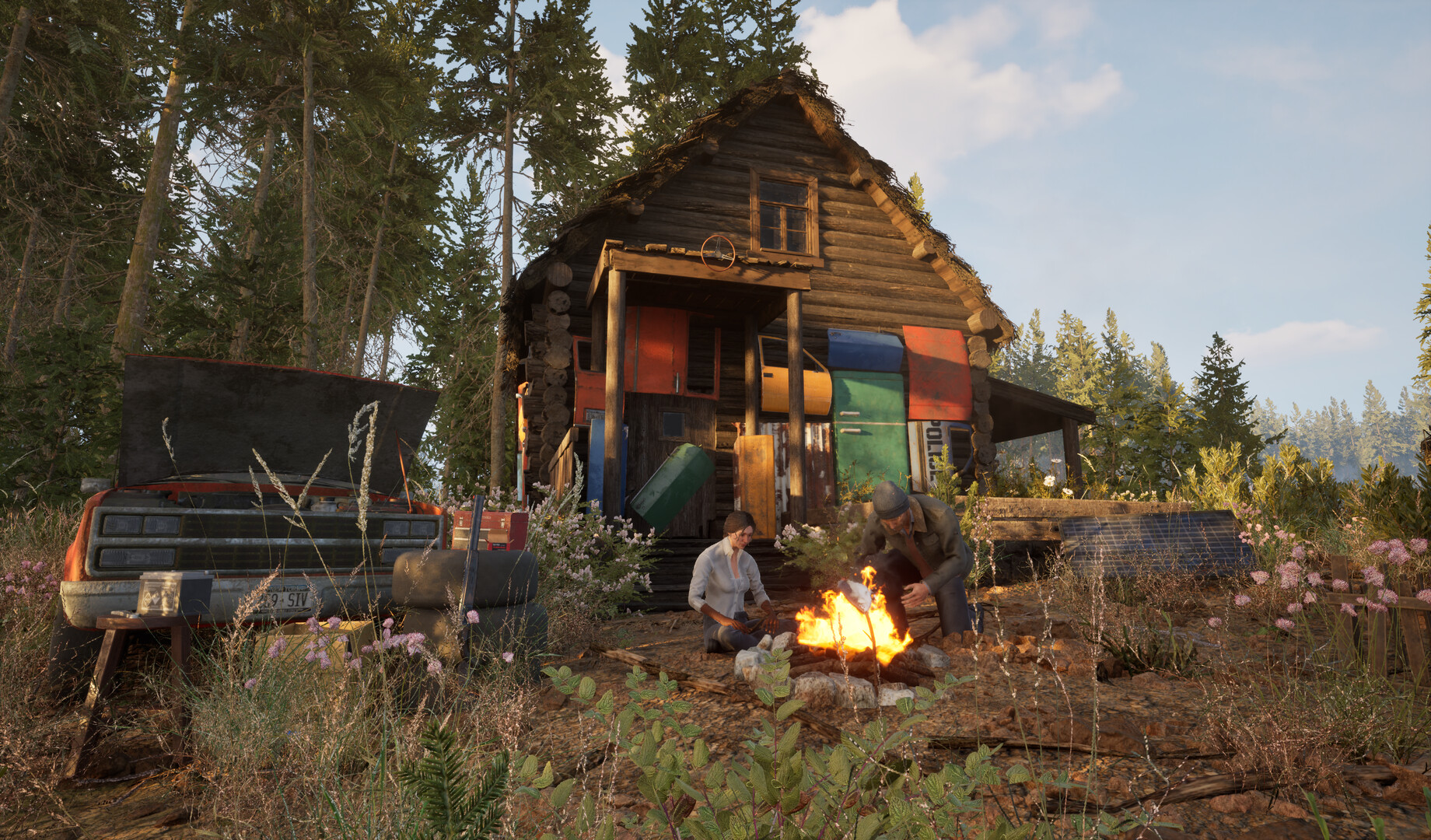
Source: Official Steam page / Cornfield Games. Game media © Cornfield Games.
The specific reinforcement described by the developer
The Steam shelter section gives wood as the primary building material. It explains that a door or hood removed from an old vehicle can be attached to a wooden wall. The stated purpose is to make it harder for unwanted visitors to get inside.
This is a concrete defensive concept rather than a numerical armor specification. It tells you what sort of object is repurposed and where it is used. The collected sources do not provide a damage-reduction percentage or a durability multiplier.
Why salvaged parts matter to protection
The reinforcement example connects defense with scavenging. An object from an old vehicle becomes part of a shelter instead of remaining unused in the environment. This fits the developer’s broader description of surviving with practical objects already present in the district.
Gamerficial’s article and the fan fortification overview corroborate the same wall-panel concept. Their coverage helps explain the official feature. It is not a measured comparison of every possible defensive material.
Base raids are officially announced
The developer’s introduction names raids on the player’s base. That provides the relevant threat context for reinforcement. It establishes the presence of raids without specifying when they happen or how their strength is determined.
A general raid feature should not be converted into an every-night schedule. The collected evidence also does not name a best weapon or a proven trap system. This article keeps the confirmed threat separate from tactics that have not been demonstrated.
A fortified wall is not a guarantee of immunity
The official wording describes making entry harder. It does not say that a panel makes a wall impossible to breach. The distinction matters when deciding how much protection the documented example actually promises.
No invulnerable layout was verified in the research. Nor was a fixed upgrade order compared against several raid conditions. A guide should not turn a qualitative protection feature into a guarantee that a base cannot be attacked successfully.
Connect defense to the other verified systems
The building guide explains the wooden structure that receives the reinforcement. The resource guide identifies old vehicles as the official source category for the panels. Reading them together links preparation and protection without adding a guessed material list.
The location guide separately records the absence of a verified best-site ranking. A defense example does not establish that one map position is permanently safe. The sources below support the reinforcement concept and raid context described in this article.
Sources
- Official Steam listing
- Cornfield Games announcements
- Fan wiki — fortification
- Gamerficial — shelter protection
Independent fan coverage. Official descriptions and dated demo reports are identified in the article.